Five Trends Impacting Data Centre Engineering in 2026

The data centre industry is entering a defining new chapter. Driven by rapid advances in AI, a global surge in high-performance compute and growing pressure on power and sustainability infrastructure, the demands placed on facilities are changing at unprecedented speed.
At our Global Engineering Conference in Manila, our engineers from across Europe, the Middle East and Asia discussed the big shifts reshaping how data centres are designed, built and operated. Their discussions highlighted five major trends that will steer the industry into 2026 and beyond.

The data centre industry is entering a defining new chapter.  As new data centre trends emerge driven by rapid advances in AI, a global surge in high-performance compute and growing pressure on power and sustainability infrastructure, the demands placed on facilities are changing at unprecedented speed.

At our Global Engineering Conference in Manila, our engineers from across Europe, the Middle East and Asia discussed the big shifts reshaping how data centres are designed, built and operated. Their discussions highlighted five major data centre trends that will steer the industry into 2026 and beyond.

  1. Cooling for the New Compute Era

Rising compute intensity is pushing traditional cooling approaches to their limits. Air cooling, long the backbone of data centre thermal management, can no longer support the heat loads generated by next-generation processors, AI accelerators and high-density racks.

Liquid cooling is rapidly becoming a core requirement rather than a future trend. Direct-to-chip systems, immersion cooling and water-cooled chiller technologies are now central to conversations about future-ready facilities. This shift is also driving a need for more advanced control strategies and detailed simulation work to ensure systems are safe, scalable and efficient.

As density continues to increase, designing for liquid cooling readiness  even if deployment is phased  has become essential. Data centres that can flex and adapt to these thermal demands will be better positioned to support emerging AI workloads safely and sustainably.

Eduardo Golloy Jr. – Senior Building Physics Engineer 

“The key to successful adoption lies in de-risking the transition through robust, forward-looking design strategies. Thoughtful system architecture along with advanced thermal simulations, can mitigate implementation challenges and ensure scalability for future technologies.”

  1. Scaling at Unprecedented Speed

The sector has moved far beyond incremental cloud growth. AI adoption, consolidation among hyperscalers and the rise of multi-site campus strategies are accelerating development at a pace.

Niamh O’ Halloran, Mechanical Engineer

“The surge for rack density as AI and newer technologies push demands for power greater than before is reshaping the industry. We need infrastructure strategies to match this scale, sustainably and reliably.”

Single-facility builds in the range of 20–50 MW are being replaced by 150–300 MW campuses delivered in phases, often with highly compressed timelines. This growth demands new levels of design coordination, sequencing and supply-chain integration. As densities rise, the pressure on national grids is also intensifying, making early utility engagement and long-term energy planning more important than ever.

  1. New Models for High-Demand Power

Power availability has become one of the defining challenges for future data centres. In many regions, utility networks simply cannot deliver the capacity or connection timelines required to meet demand.

Wesley Daniel, Technical Director – Power Systems & Infrastructure

“Engineering focus is moving outward. From optimising internal reliability to managing dynamic interactions with the grid. The new design paradigm treats the data centre as an active grid participant. Known solutions to relieve pressure on constrained networks include co-location with generation, on-site energy storage, and hybrid AC/DC architectures. Behind-the-meter generation and microgrids are also being developed not only for resilience but as controllable assets that support voltage and frequency stability. This evolution places new demands on data centre electrical engineers. They must be familiar with these technologies and deploy them in fit-for-purpose ways to ensure systems can ride through faults, participate in demand response, and integrate protection logic with utility relays in real time.”

The rise of Bring-Your-Own-Power (BYOP) models also offers a path to decarbonisation and improved water stewardship by allowing operators greater control over the sustainability profile of the power they consume.

  1. AI-Enabled Engineering

AI is reshaping both how data centres operate and how they are designed. Many equipment manufacturers now offer AI-enhanced performance features as standard, and that capability is beginning to shift from individual systems to centralised platforms.

This evolution paves the way for facility-wide data environments where integrated controls, automation and digital twins can support more predictive, informed and evidence-based decision-making.

Stuart Bridges, Associate Director – BMS & Smart Buildings

“With a robust data structure and continuously streaming live data, digital twins will transform from technology development toys and allow realistic simulation resolving ‘what-if’ scenarios for tasks such as capacity planning, outage simulation, sustainability benchmarking and better reporting.”

AI is also influencing how engineering teams work. Automation tools, bespoke applications and intelligent modelling workflows are helping streamline design processes and improve accuracy, enabling teams to focus on optimisation and innovation.

  1. Rethinking How We Build

As the industry evolves, construction methodologies are changing alongside technology. Sustainability expectations combined with speed, cost pressures and investor demands  are driving a fundamental rethink of how buildings are delivered.

Clients are increasingly open to revisiting technologies previously seen as too risky or unconventional, prompted by the urgent need to solve rising energy and cooling constraints.

This shift mirrors a wider transformation: data centres are moving from bespoke construction projects to industrialised assets. Productised MEP systems, modular factory-built components and repeatable design platforms are enabling faster, more predictable, large-scale delivery.

Charlie Bater, Chief Technical Officer

“The centre of gravity in engineering is shifting from drawings and construction packages to supply-chain integration, modularisation strategies and factory-led manufacturing. The question is no longer “Can we design it?” but “Can we produce it globally, repeatedly, and on schedule?” Digital engineering, configuration engines, and parametric MEP systems are becoming essential tools to meet the expectations of institutional capital and to unlock industrial-scale delivery.”

Looking Forward

The data centre industry is maturing into a global infrastructure class. Meeting the demands of AI, sustainability and long-term resilience will require tight collaboration between engineers, suppliers, developers, operators and regulators.

At Black & White, our global engineering teams are preparing for these data centre trends  and the next era by bringing together technical innovation, and a shared commitment to building a more sustainable digital world.

If you’re exploring upcoming projects or looking for a partner to help navigate these shifts, we’d love to connect. Contact us here.

Sustainability: An Engineering Imperative

Sustainability is more than just a buzzword; it’s a critical engineering challenge demanding a comprehensive and precise approach.
Edmar Cabra, Regional Sustainability Lead – MENA, explains why sustainable engineering solutions must go beyond certifications to deliver real, measurable outcomes.

Sustainability is more than just a buzzword; it’s a critical engineering challenge demanding a comprehensive and precise approach.

In this article Edmar Cabra, Regional Sustainability Lead – MENA, explains why sustainable engineering solutions must go beyond certifications to deliver real, measurable outcomes.

While “Green” certifications for facilities like data centres might seem like a victory, they don’t always guarantee true sustainability. A ‘green’ certified data centre, for instance, could still exhibit high energy and water consumption, and significant emissions compared to a non-certified one. This underscores the necessity for sustainability strategies to deliver tangible results that encompass the total cost of ownership, looking beyond mere CAPEX or OPEX.

“True sustainability hinges on measurable impact.”

At its core, sustainability in engineering focuses on three pivotal areas: energy, water and carbon. These elements yield the highest impact across all sustainability categories, making them the prime targets for effective solutions. Addressing these issues requires rigorous engineering analysis –
– Identifying the problem
– Pinpoint immediate causes and contributing factors, and
– Meticulously plan for corrective or preventive actions
This systematic problem-solving approach is fundamental to achieving meaningful progress.

The Imperative of Data in Regulation Compliance

Real-world challenges in achieving sustainability are increasingly driven by evolving regulations. Consider the new Energy Efficiency Directive (EED) in the European Union, for example. It mandates significant energy efficiency improvements and transparent reporting for businesses, particularly those operating data centres. This legislation directly impacts how companies must manage their energy consumption and carbon footprint, fundamentally shifting from voluntary certifications to legally binding requirements. Such directives unequivocally highlight the urgent need for a data-driven approach.
In this rapidly evolving regulatory landscape, data centre operators, in particular, face escalating pressure to be transparent about their energy and water usage, as well as their carbon emissions. This is precisely where data becomes paramount. Accurate and comprehensive data is the linchpin for understanding current performance, setting realistic targets, and effectively tracking progress. Without such precise data, even the most ambitious sustainability goals remain aspirational. Therefore, the industry must proactively move towards robust data collection and analysis to not only meet these new obligations but also genuinely improve environmental performance.

Engineering for a Sustainable Future: Best Practices

Engineering solutions must be precise and bespoke. They must be meticulously tailored to deliver peak performance and minimise environmental impact in diverse environments, from the scorching desert heat of the UAE to the humid climates of Southeast Asia and the cold climate of the Nordics. This means leveraging advanced modelling tools to ensure that every Mechanical, Electrical, and Plumbing (MEP) system is the optimal fit for specific project needs and local climatic conditions. The industry needs to prioritise bespoke engineering that considers every variable, optimising for efficiency and resilience under real-world operating conditions.

“Engineering solutions must be precise and tailored. Generic approaches simply won’t suffice.”

Innovation as a Cornerstone of Sustainable Engineering.

The commitment to tackling these complex sustainability challenges is increasingly amplified by continuous research and development. A technology-backed solution approach is crucial, relentlessly seeking out and evaluating cutting-edge innovations. This involves actively partnering with leading manufacturers and technologists to ensure that the most advanced and effective solutions are seamlessly integrated into projects. This proactive embrace of innovation keeps organisations at the forefront of sustainable engineering, enabling them to consistently offer state-of-the-art solutions that push the boundaries of energy efficiency and environmental responsibility. The future of sustainable engineering relies on a collective dedication to innovation, knowledge sharing, and the practical application of new technologies.

By synthesising in-depth engineering analysis, data-driven insights, and a steadfast dedication to research and development, the industry can spearhead the transformation of sustainability from an abstract concept into a measurable and achievable engineering reality. This holistic approach, firmly rooted in precise engineering and technological advancement, is how businesses can not only meet but unequivocally exceed their sustainability goals, paving the way for a more resilient and responsible future. It’s about empowering organisations with the knowledge and tools to make informed decisions and implement solutions that genuinely contribute to a more sustainable world.

If you’re working towards lower emissions, improved efficiency or compliance with evolving regulations our team can support you with practical, tailored solutions backed by real-world performance data.

Contact us to discuss how we can support your projects.

How CFD Safeguards AI Data Centres

As compute intensity rises, CFD is key to designing resilient and efficient AI-ready data centres.
In our latest article, Ramamoorthy Sethuramalingam, Associate Director and Head of CFD, explores how Computational Fluid Dynamics is enabling next-generation thermal strategies for high-density, AI-ready environments.
From rack-level airflow to campus-wide liquid cooling, CFD supports smarter decisions, greater resilience and enhanced energy performance across the full data centre lifecycle.

Computational Fluid Dynamics (CFD) is fast becoming essential to the evolution of AI scale data centres, where the density and complexity of compute workloads are reaching unprecedented levels. Maintaining performance and resilience in these environments demands more than traditional design, it requires precision engineering, proactive risk mitigation, and advanced simulation-based verification. CFD plays a pivotal role in delivering all three.

In this article, Ramamoorthy Sethuramalingam, Associate Director and Head of CFD explores how CFD supports smarter engineering decisions for AI-ready, high-density data centres, from rack-level airflow to site-wide heat rejection systems. 

Smarter Data Centre Cooling Strategies with CFD 

CFD empowers our engineering teams and clients to visualise and optimise airflow, pressure zones, and heat distribution across high-density environments. Whether designing a new facility or fine-tuning an existing one, CFD provides a predictive lens into system behaviour, preventing thermal hotspots, supporting uptime, and driving operational efficiency from day one. 

Internal Air-Side Cooling in AI Data Halls 

In conventional air-cooled halls, CFD identifies recirculation issues, airflow short circuits, and ineffective containment strategies. Using these simulations to design optimised cold-aisle and hot-aisle systems, ensuring even the most power-dense racks are cooled reliably, without over provisioning. 

Modelling Liquid Cooling Systems for High-Density Loads 

As air cooling reaches its limits, AI workloads increasingly rely on direct-to-chip cooling, immersion systems, and rear-door heat exchangers. CFD enables our engineers to model coolant 1-D flow paths, detect imbalances, and anticipate temperature deviations before deployment. It also allows simulation of failure modes (such as pump outages, power outages, equipment failures etc), so that robust contingency plans are embedded in the design. 

To support large-scale liquid cooling topologies, integrating 1-dimensional thermal and hydraulic modelling. This allows us to size pipework, optimise pump selections, and ensure consistent flow across parallel circuits. For AI-ready campuses, 1D and 3D simulations together deliver a holistic, scalable cooling strategy with built-in redundancy. 

Buffer Vessel CFD Optimisation 

Buffer vessels are critical for thermal inertia and flow stability. And using vessel mixing patterns, heat retention, and dynamic load responses, CFD guarantees that temperature fluctuations are smoothed out-even during power failure transient states like load spikes or component failures and ensuring IT reliability. 

External Plant Performance 

Chillers, dry coolers, and adiabatic systems play a central role in rejecting heat from IT to the atmosphere. CFD helps us evaluate the interaction between plant layout, prevailing winds, building geometry, and heat plumes. This insight is vital to prevent thermal recirculation, reduce fan energy, and maximise the effectiveness of external plant assets in any climate. 

Modular Pod-Level Simulations 

For rapid-deploy modular systems and containerised electrical pods, CFD delivers pre-installation design validation. Our CFD engineers test pod configurations to ensure airflow integrity, containment compatibility, and cooling adequacy before physical deployment reducing commissioning risks and accelerating rollout. 

At Black & White Engineering Ltd, CFD is more than a modelling tool, it’s a strategic asset. From rack-level detail to site-wide thermal resilience, our CFD-driven approach supports smarter, safer, and more scalable AI data centre environments. As compute intensity increases, so does our commitment to delivering engineering solutions that keep performance, sustainability, and reliability in perfect balance. 

Want to enhance the resilience and efficiency of your AI-ready data centre?
Contact our team to explore how CFD led design can transform your infrastructure. Visit our contact page to start the conversation. 

How to Balance Sustainability and Resilience in Data Centre Design

As the data centre industry continues to evolve at pace, the challenge remains clear: how can we design resilient, high-performing facilities while minimising environmental impact?
In our latest article, Scott Wilson Regional Sustainability Lead at Black & White Engineering explores key strategies to optimise sustainable data centre design without sacrificing operational resilience.

Balancing operational resilience with sustainability in data centre design is a complex, often contradictory challenge. While ensuring that data centres remain operational even during failures is critical, these measures can inadvertently increase the environmental footprint. How can the industry move towards more sustainable data centre operations without compromising on resilience? Scott Wilson Regional Sustainability Lead at Black & White Engineering shares his insights. 

The Trade-offs Between Resilience and Sustainability in Data Centre Design

Data centres are designed with redundancy to ensure uninterrupted service during plant failures. Redundancy configurations such as N+1, 2N, or even 2N+1 are common, providing backup equipment to maintain operations. However, this overengineering introduces several sustainability concerns: 

  • Increased Embodied Carbon: More plant equipment means higher embodied carbon, particularly in MEP (Mechanical, Electrical, and Plumbing) systems. The additional structural steel and concrete required for oversizing further contribute to this carbon load. 
  • Impact on Efficiency: Oversized equipment may lead to lower operational efficiencies in the real world. 
  • Backup Power Reliance: Diesel-powered generators, which are often used for backup power, remain a major contributor to emissions. 
  • Higher Resource Consumption: The need for increased plant provision and backup systems leads to more resource consumption. 

While redundancy is essential for resilience, these factors must be carefully managed to ensure they don’t conflict with sustainability goals. 

Location Matters: Reducing Carbon Footprint from the Start 

The location of a data centre can play a significant role in its sustainability. Data centres in colder climates, for example, can leverage free cooling, which reduces energy demand for cooling systems. This, in turn, lowers peak demand and reduces the size of required plant and backup systems. A smaller plant means less embodied carbon, as well as reduced redundancy needs and lower UPS and generator capacity. 

Innovations in Backup Power and Efficiency 

Modern technology offers several ways to improve efficiency and reduce emissions: 

  • Modular UPS Systems: Load switching UPS systems allow individual modules to be powered off during low-demand periods, improving energy efficiency. 
  • HVO Generators: Replacing diesel generators with hydrogenated vegetable oil (HVO) produces 10% of emissions compared to diesel, making it a more sustainable backup power option. 

Waste Heat Utilisation: Turning a By-product into an Asset 

One often overlooked but highly sustainable option is waste heat utilisation. Data centres naturally generate excess heat, but rather than allowing this to go to waste, it can be harnessed for other purposes. By connecting to district heating networks, data centres can transfer waste heat to nearby communities or industries, reducing the need for additional energy production. For this to be viable, significant investments in infrastructure are needed. Regions with existing networks, such as Denmark’s Fjenvarme Fyn, are leading the way in this regard. 

Water Source Cooling 

Cooling is one of the largest energy consumers in a data centre. By situating data centres near bodies of water, the demand for cooling can be significantly reduced. Water has a more consistent temperature than air, which helps to stabilise cooling requirements. Additionally, underwater or floating data centres, like Microsoft’s pilot project in the Orkney Islands, have shown promising results in terms of reduced server failure rates and increased energy efficiency. 

Liquid and Immersion Cooling Innovations 

Two innovative cooling technologies are gaining traction in the industry: 

  • Liquid Cooling: This system eliminates the need for traditional CRAC/CRAH units, reducing potential failure points. It also cools chips more effectively, lowering the likelihood of failure and reducing downtime. 
  • Immersion Cooling: This solution immerses servers in a cooling liquid, protecting them from contaminants and maintaining cooling even during power outages. Immersion cooling significantly reduces energy consumption and protects servers from ambient temperature fluctuations. 

These cutting-edge cooling methods not only improve resilience by protecting hardware but also help reduce the overall energy consumption of data centres. 

Striking the Right Balance 

As the data centre industry continues to evolve, the challenge remains clear: how can we design resilient, high-performing facilities while minimising environmental impact? By embracing innovative solutions such as modular UPS, HVO backup power, waste heat utilisation, and advanced cooling technologies, the industry can make meaningful progress towards more sustainable operations. However, finding the right balance between resilience and sustainability will require careful consideration at every stage of the design and operational process. 

By implementing these strategies, data centres can not only meet the increasing demand for digital infrastructure but also play a key role in driving a more sustainable digital future. 

At Black & White Engineering, we collaborate with developers to implement innovative solutions that balance sustainability in data centre design with resilience. If you’re looking to future-proof your data centre infrastructure, get in touch with us to continue the conversation.
Cooling the AI Boom: Hybrid Solutions in Data Centres

In our latest article from our Future of Data Centres series, Nick Remington, Technical Director at Black & White Engineering, explores the rise of hybrid cooling solutions, their efficiency gains, and what they mean for the sustainability of hyperscale facilities.

As artificial intelligence accelerates data centre workloads, traditional cooling methods are struggling to keep up. With power density on the rise, operators face an urgent question: how do we manage this energy without compromising efficiency or sustainability?

Hybrid cooling solutions are fast becoming the answer for data centres. But are they enough to future-proof for the AI era? In this article, part of our Future of Data Centres series, Nick Remington, Technical Director at Black & White Engineering, shares his perspective on what’s changing, what’s working and what’s coming next.

How AI is Transforming Power and Cooling Demands

Demand for data centre capacity is already at a historic high due to cloud hosting, enterprise platforms and data storage. But AI has taken that demand to a new level.

We’re seeing a tangible shift across the board from hyperscale and neocloud developers towards significantly higher power densities. This is largely driven by the rapid deployment of AI GPUs, vastly reshaping how data centres are designed, built and operated.

What Are the Advantages of Hybrid Cooling Over Traditional Solutions?

As power density increases, traditional air-cooling methods are no longer sufficient. Hybrid cooling systems combine air and liquid cooling technologies, such as direct-to-chip and immersion cooling. Liquid cooling removes heat directly from the GPU’s heat source offering a far more efficient heat transfer compared to air.

These systems improve the facility’s Power Usage Effectiveness (PUE), helping reduce operational emissions and power consumption. Higher power density means less white space is needed, reducing the overall building footprint, lowering capital costs, speeding up construction and the permit approval process as well as cutting embodied carbon.

Can Hybrid Systems Support Sustainability Goals?

Hybrid systems offer higher efficiency, particularly in reducing Scope 2 emissions. By operating the facility water system (FWS) at higher temperatures, we can minimise the use of chiller compressors, lowering energy use even further. The cooling distribution units (CDUs) used in these solutions consume significantly less power than traditional air-cooling fans, offering further PUE improvements.

Another key benefit is heat reuse. With a high-temperature FWS, there’s a real opportunity to export heat to surrounding buildings or feed into a district heating network. While this doesn’t drastically improve data centre performance, it has a meaningful impact on the wider built environment.

The Future Outlook: Will Hybrid Cooling Become the New Standard in Data Centres?

The rise of hybrid cooling is directly linked to the uptake in AI deployment. While some large hyperscalers have recently slowed AI investments, the broader trend remains clear. A new generation of GPU cloud operator, the neoclouds, have arrived and are pushing these limits to suit the latest GPU requirements.

There’s strong momentum in AI adoption because of its wide-reaching benefits, from generative AI and large language models (LLMs) to advanced science and economic growth. We expect this demand to continue rising at pace and cooling strategies must evolve accordingly.

Direct-to-chip has widely been the immediate industry accepted solution. This will soon be followed by 2-phase liquid cooling and immersion cooling, all readily available and offering different benefits with increasing capacities.

Let’s Talk About Smarter Cooling

As AI pushes data centres to new performance thresholds, hybrid cooling offers a compelling way to stay ahead, balancing high-efficiency performance with long-term sustainability. This shift won’t happen overnight, but for data centre developers, designers and operators, the time to explore and implement smarter cooling strategies is now.

For more on hybrid cooling solutions in data centres you can hear from Nick and other industry experts in a recent feature for News in the Channel.

At Black & White Engineering, we work closely with data centre developers to implement innovative solutions that support these goals. If you are looking to future-proof your data centre infrastructure, get in touch with us to continue the conversation. 

3 Strategies For Addressing the Data Centre Talent Shortage

The data centre sector is evolving rapidly, but the shortage of skilled professionals remains a significant challenge. Caff Allen, Global Director Learning and Development and our team of experts at Black & White Engineering explore 3 key strategies for addressing the data centre talent shortage.

The data centre talent shortage is one of the biggest challenges facing the industry today, with demand for skilled engineering professionals outpacing supply.

These rapid developments require precise coordination to meet tight timelines with stringent functionality and sustainability requirements. More engineering professionals with expertise in data centre design, construction and installation will be key to delivering mission critical projects to the highest standards. The ripple effect data centres have on communities will also require additional liaison and collaboration where new skilled officer roles will become more in demand.

Why Is The Data Centre Industry and Engineering Sector Heading Towards A Talent Shortage?

Stonehaven research states in the UK alone, every year there is a deficit of 59,000 engineers to recruit, despite rising workforce demand. Leading to a skills gap of 1 million engineers by 2030.
An urgent evolution of the engineering industry’s positioning is required. To effectively tackle shortage, the industry must adopt proactive strategies to attract, develop and retain the next generation of skilled engineering professionals needed to meet the growing demand. Caff Allen, Global Director Learning & Development and our team of experts at Black & White Engineering explore 3 key strategies for addressing the data centre talent shortage.

1. Invest In Training And Upskilling

Training and upskilling initiatives are vital to enable individuals to specialise in high-demand fields. Collaborations with universities, institutions and professional bodies can provide the necessary certifications and knowledge needed to succeed in the sector.
Caff Allen, Global Director of Learning & Development, highlights: “The fast-paced evolution of the data centre industry requires professionals who can stay ahead of emerging trends. At Black & White, we invest heavily in structured learning and development, combining technical training with professional skills development. This approach includes global and regional engineering conferences, specialised training resources and leadership development programmes that equip professionals to lead in a rapidly evolving industry.”

2. Recognise Skills Beyond The Technical

The industry’s focus on attracting skilled professionals extends beyond technical expertise. Amy Henderson, Regional People Manager at Black & White Engineering, explains: “The most valuable skills we seek go beyond technical expertise. We prioritise adaptability, a strong learning mindset and a collaborative approach. Our one global team culture thrives on individuals who not only bring their technical skills but also enhance and complement our team.”

3. Raise Awareness And Perceptions Of The Data Centre Industry

Attracting talent to the data centre industry requires more than recruitment efforts, it also demands a fundamental shift in awareness and perception. A key challenge is making data centre careers and engineering pathways more visible and accessible.
As Adam Asquith, Technical Director at Black & White Engineering, highlights: “The industry must take a long-term approach to engaging with communities and shifting perceptions about data centre careers. By providing platforms that showcase the value of data centres in shaping a digital future, the sector can inspire the next generation of engineering professionals.”

To hear more from Caff Allen, Global Director of Learning & Development and other industry experts on the latest trends and challenges in the data centre industry. Check out our recent feature in Intelligent Data Centres here.

At Black & White Engineering, we are shaping the next generation of engineering professionals by investing in our people. If you’re passionate about engineering and want to be part of our industry-leading team, visit our careers page for information on our current vacancies.

Rethinking Power Strategies for Hyperscale Data Centres

As AI adoption accelerates, the energy demands of hyperscale data centres are growing rapidly. Devan Moodley, Global Director – Power Systems & Infrastructure at Black & White Engineering, explores the evolving energy landscape and what data centre operators must consider as regulations and sustainability targets tighten.

The feasibility of microgrids and their potential advantages over nuclear-powered energy for hyperscale data centres is a critical discussion point in the energy sector.

Devan Moodley, Global Director – Power Systems & Infrastructure at Black & White Engineering, shares his insights on the evolving energy landscape and what it means for data centre operators.

Microgrids vs Modular Nuclear: What’s the best option for Hyperscale Data Centre Power Infrastructure?

Microgrids and grid independence have long been key considerations for major utility providers and power consumers. The growing integration of behind-the-meter renewables has shifted the role of distribution network operators, creating increased competition for grid connections. Data centre operators are now among those seeking alternative solutions to secure a reliable power supply.

Microgrids typically integrate renewables at the end-consumer level within the distribution network, usually at low voltage. These systems rely on a dedicated power source, historically including solar, diesel and gas generation. However, the large-scale power demands of hyperscale data centres require generation connections at the medium-voltage level, which only large gas turbines can currently support.

With net-zero targets pushing the transition away from gas, nuclear power is gaining attention as a potential solution. The development of modular nuclear generation plants is advancing rapidly, and if successfully deployed, they could provide clean, reliable energy at scale. This could have a transformative impact on both utility providers and energy-intensive industries such as data centres.

In the near term, supplementing grid supply with gas-powered generation may still be necessary. However, the extent to which this remains viable will depend on evolving environmental regulations. As cleaner energy solutions progress, microgrids, modular nuclear and other emerging technologies will play an essential role in addressing capacity challenges in the data centre sector.

Alternative Power Solutions That Haven’t Gained Mainstream Adoption

Most data centres are built in urban areas, while power generation facilities are typically located near fuel sources. This applies to wind, solar, coal and other energy sources. Finding alternative solutions that avoid significant drawbacks remains a challenge.

Open-cycle gas turbine plants are one potential option, offering flexible, on-demand power. However, they come with challenges such as emissions, noise pollution, and reliance on a stable gas supply. Another consideration is whether data centre operators are willing to host generating plants on-site, which would require a shift in operational strategy.

As the industry evolves, it is becoming increasingly clear that data centre owners and operators may need to transition into generating asset owners to secure reliable and sustainable power.

Managing Power Demands in the AI Era

The accelerating adoption of AI is driving unprecedented power demand. As data centres grow in scale and complexity, new solutions will be required to improve efficiency, including the development of energy-efficient chips, advancements in cooling system design and optimisation of electrical infrastructure.

One of the biggest challenges ahead is the introduction of new regulations. Stricter policies on carbon emissions, energy sourcing, and grid reliance could reshape the data centre industry. Developers and operators must take a proactive approach to future-proofing their facilities.

The industry is at a turning point. As energy demands continue to rise, forward-thinking power strategies will be critical in securing a stable and sustainable future for hyperscale data centres. To explore how these changes could impact your data centre infrastructure, get in touch with our team.

The innovative use of waste heat in data centre operations

Dawid Kropiwnicki and Nick Remington from our London office share their insights with Datacentre Review.

Nick Remington, Technical Director and Dawid Kropiwnicki, Principal Engineer from our London office recently shared insights with Datacentre Review on the innovative use of waste heat in data centre operations to improve power usage effectiveness (PUE).

In the article, they explore findings from a Black & White study that examined how repurposing waste heat from data centres can help meet regulatory PUE targets outlined in the European Energy Efficiency Directive.

By redirecting this excess heat to local district heating networks, the study revealed significant improvements in both annual and peak PUE metrics, offering a clear path towards more sustainable infrastructure solutions.

Read the full article here: https://datacentrereview.com/2024/12/utilising-waste-heat-to-improve-pue/

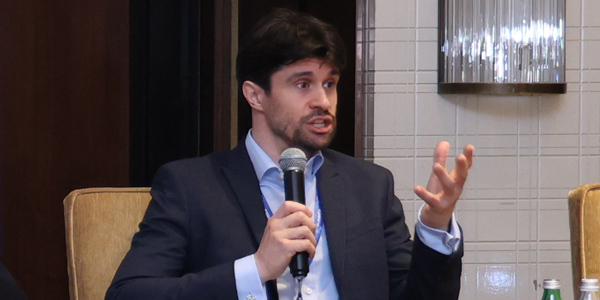
Transformative journey of data centres and technologies in KSA: Insights from Black & White Engineering

Alistair Davis, Black & White director based in Dubai, took part in the Saudi Cloud and Data Centre Convention 2023.

In the world of data centres and evolving technology, Black & White Engineering stands as a leading MEP consultancy, specialising in intricate MEP engineering projects. Over the last decade, our focus has centred on the growing data centre industry, fostering strong partnerships with colocation providers and hyperscalers.

Recently, Alistair Davis, one of our directors based in Dubai took part in the Saudi Cloud and Data Centre Convention 2023. His engagement delved into the dynamic world of data centres, cloud technologies, and their evolving landscape, presenting valuable insights into the industry’s current state and prospects.

Reflecting on pivotal technological and innovational advancements, Alistair highlighted the game-changing impact of hyperscalers, Data sovereignty, sustainability, modular construction and the surge of streaming services. These innovations have significantly shaped the data centre landscape, bringing forth a new era of efficiency and sustainability.

Alistair’s exploration into the receptivity of data centres to technology shed light on future-ready designs and innovative integrations. These include developments such as Microsoft’s AI chips and liquid cooling systems, reflecting the industry’s commitment to embracing cutting-edge solutions.

Anticipating the future, Alistair emphasised the transformative potential of Machine Learning, IoT, and their profound implications across industries, from healthcare to everyday conveniences. The vision for future data centre innovations highlights AI, IoT, cloud strategies, 5G advancements, edge computing, and renewable energy integration as key drivers.

Furthermore, Alistair analysed the predictability of future technologies, showcasing the potential of AI-powered energy management and predictive maintenance systems. These advancements promise to optimise MEP systems for energy efficiency and refine data centre operations significantly.

Concluding thoughts highlighted Saudi Arabia’s strides in becoming a global leader in data-driven economies through initiatives like the SDAIA and visionary projects like NEOM and Qiddiya. However, challenges in IT capacity, talent retention, and deployment persist, emphasising the need for ongoing innovation and skilled workforce development.

Black & White Engineering remains committed to driving innovation and shaping the future of data centres and technologies. Contact us to explore how we can enhance your data centre projects, contributing to the tech-driven future.