
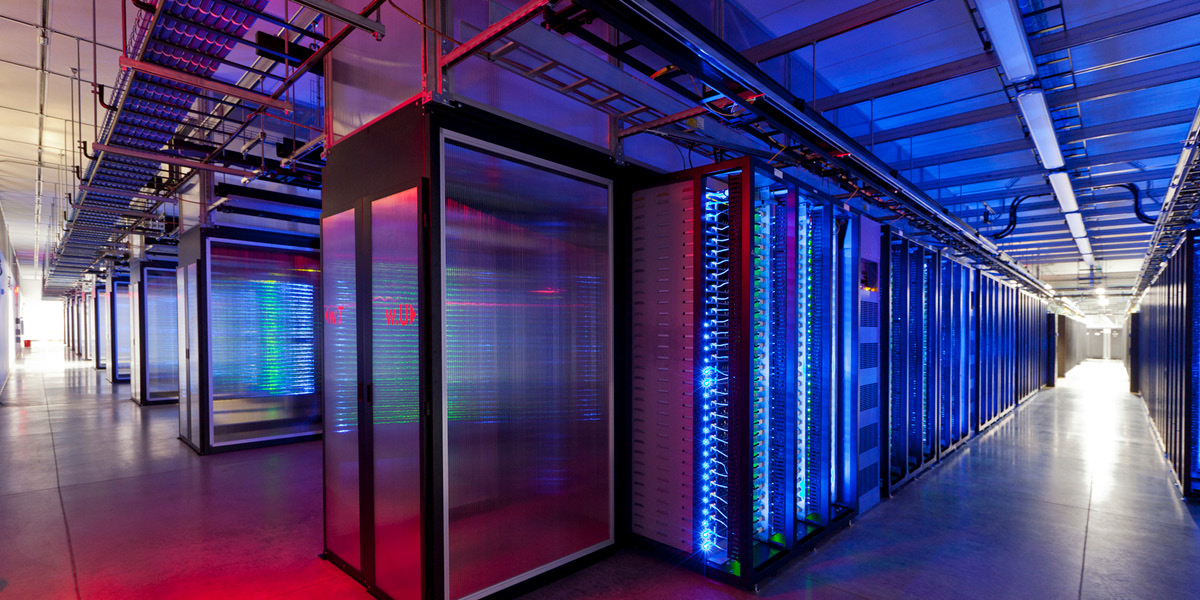


The data centre industry is entering a defining new chapter. As new data centre trends emerge driven by rapid advances in AI, a global surge in high-performance compute and growing pressure on power and sustainability infrastructure, the demands placed on facilities are changing at unprecedented speed.
At our Global Engineering Conference in Manila, our engineers from across Europe, the Middle East and Asia discussed the big shifts reshaping how data centres are designed, built and operated. Their discussions highlighted five major data centre trends that will steer the industry into 2026 and beyond.
- Cooling for the New Compute Era
Rising compute intensity is pushing traditional cooling approaches to their limits. Air cooling, long the backbone of data centre thermal management, can no longer support the heat loads generated by next-generation processors, AI accelerators and high-density racks.
Liquid cooling is rapidly becoming a core requirement rather than a future trend. Direct-to-chip systems, immersion cooling and water-cooled chiller technologies are now central to conversations about future-ready facilities. This shift is also driving a need for more advanced control strategies and detailed simulation work to ensure systems are safe, scalable and efficient.
As density continues to increase, designing for liquid cooling readiness even if deployment is phased has become essential. Data centres that can flex and adapt to these thermal demands will be better positioned to support emerging AI workloads safely and sustainably.
Eduardo Golloy Jr. – Senior Building Physics Engineer
“The key to successful adoption lies in de-risking the transition through robust, forward-looking design strategies. Thoughtful system architecture along with advanced thermal simulations, can mitigate implementation challenges and ensure scalability for future technologies.”
-
Scaling at Unprecedented Speed
The sector has moved far beyond incremental cloud growth. AI adoption, consolidation among hyperscalers and the rise of multi-site campus strategies are accelerating development at a pace.
Niamh O’ Halloran, Mechanical Engineer
“The surge for rack density as AI and newer technologies push demands for power greater than before is reshaping the industry. We need infrastructure strategies to match this scale, sustainably and reliably.”
Single-facility builds in the range of 20–50 MW are being replaced by 150–300 MW campuses delivered in phases, often with highly compressed timelines. This growth demands new levels of design coordination, sequencing and supply-chain integration. As densities rise, the pressure on national grids is also intensifying, making early utility engagement and long-term energy planning more important than ever.
-
New Models for High-Demand Power
Power availability has become one of the defining challenges for future data centres. In many regions, utility networks simply cannot deliver the capacity or connection timelines required to meet demand.
Wesley Daniel, Technical Director – Power Systems & Infrastructure
“Engineering focus is moving outward. From optimising internal reliability to managing dynamic interactions with the grid. The new design paradigm treats the data centre as an active grid participant. Known solutions to relieve pressure on constrained networks include co-location with generation, on-site energy storage, and hybrid AC/DC architectures. Behind-the-meter generation and microgrids are also being developed not only for resilience but as controllable assets that support voltage and frequency stability. This evolution places new demands on data centre electrical engineers. They must be familiar with these technologies and deploy them in fit-for-purpose ways to ensure systems can ride through faults, participate in demand response, and integrate protection logic with utility relays in real time.”
The rise of Bring-Your-Own-Power (BYOP) models also offers a path to decarbonisation and improved water stewardship by allowing operators greater control over the sustainability profile of the power they consume.
-
AI-Enabled Engineering
AI is reshaping both how data centres operate and how they are designed. Many equipment manufacturers now offer AI-enhanced performance features as standard, and that capability is beginning to shift from individual systems to centralised platforms.
This evolution paves the way for facility-wide data environments where integrated controls, automation and digital twins can support more predictive, informed and evidence-based decision-making.
Stuart Bridges, Associate Director – BMS & Smart Buildings
“With a robust data structure and continuously streaming live data, digital twins will transform from technology development toys and allow realistic simulation resolving ‘what-if’ scenarios for tasks such as capacity planning, outage simulation, sustainability benchmarking and better reporting.”
AI is also influencing how engineering teams work. Automation tools, bespoke applications and intelligent modelling workflows are helping streamline design processes and improve accuracy, enabling teams to focus on optimisation and innovation.
-
Rethinking How We Build
As the industry evolves, construction methodologies are changing alongside technology. Sustainability expectations combined with speed, cost pressures and investor demands are driving a fundamental rethink of how buildings are delivered.
Clients are increasingly open to revisiting technologies previously seen as too risky or unconventional, prompted by the urgent need to solve rising energy and cooling constraints.
This shift mirrors a wider transformation: data centres are moving from bespoke construction projects to industrialised assets. Productised MEP systems, modular factory-built components and repeatable design platforms are enabling faster, more predictable, large-scale delivery.
Charlie Bater, Chief Technical Officer
“The centre of gravity in engineering is shifting from drawings and construction packages to supply-chain integration, modularisation strategies and factory-led manufacturing. The question is no longer “Can we design it?” but “Can we produce it globally, repeatedly, and on schedule?” Digital engineering, configuration engines, and parametric MEP systems are becoming essential tools to meet the expectations of institutional capital and to unlock industrial-scale delivery.”
Looking Forward
The data centre industry is maturing into a global infrastructure class. Meeting the demands of AI, sustainability and long-term resilience will require tight collaboration between engineers, suppliers, developers, operators and regulators.
At Black & White, our global engineering teams are preparing for these data centre trends and the next era by bringing together technical innovation, and a shared commitment to building a more sustainable digital world.
If you’re exploring upcoming projects or looking for a partner to help navigate these shifts, we’d love to connect. Contact us here.